In today's world, driven by innovation, technology and creativity, intellectual property has become one of the most valuable assets for any small or large business, or indeed any freelance creator.
Intellectual property law is a foundational concept that ensures the fruits of the human mind (from revolutionary technological inventions to inspiring works of art) are legally protected from unauthorised use and theft.
The creation of sound, predictable and workable legislation in this area is absolutely necessary, as it not only guarantees security but also stimulates economic growth, attracts investment and promotes fair competition in the market.
Intellectual property is a broad concept that encompasses various forms of intangible assets, divided into several main categories.
Industrial property: includes patents for inventions, utility models, trademarks (protecting brand names and logos), industrial designs (the visual appearance of products) and geographical indications.
Copyright and related rights: protects literary works, databases, music, films, software, architectural designs, and works of visual art, giving creators exclusive rights over them.
Trade secrets and know-how: confidential business information (recipes, algorithms, methods) that brings an economic advantage to its owner and is kept in strict secrecy.
Trade marks: protect the name, logo, slogan and specific brand signs, allowing consumers to distinguish the goods and services of one trader from those of another, as well as original goods and services from market imitations.
You can read more about the specifics of the different types of intellectual property You can read here here.
Intellectual Property - Worldwide and in Bulgaria
Intellectual property regulation has its own peculiarities on a global scale, as legal protection is always linked to the borders of a specific country. Despite the existence of international treaties that harmonise general principles, businesses and creators must comply with the local laws of the markets in which they operate. The differences are expressed both in the procedures for registering inventions and trademarks, and in the way courts interpret copyright.
What are our rights in our country?
In Bulgaria, industrial property protection is managed by the Patent Office. Domestic legislation is fully harmonised with European directives, which ensures stability, but at the same time requires strict adherence to formal procedures. Specific to our country is the existence of the utility model, often called the „small patent“, which allows for faster and cheaper protection of technical inventions with a lower inventive step compared to the classic patent.
Intellectual property in Europe
The European Union offers a significant advantage by introducing unified instruments for the entire region. Thanks to the European Union Intellectual Property Office (EUIPO), businesses can register an EU Trade Mark or a Community Design.
This mechanism saves time and money because a single application automatically grants protection in all member states. The European approach places a very strong focus on data protection and authors' moral rights.
Overseas
On the other side of the Atlantic, the United States of America (USA) employs a fundamentally different and highly business-oriented legal system. Unlike in Europe, where the first to file a trademark application has priority, in the USA, the right is awarded to the first party to have actually used the mark in commerce.
Furthermore, American copyright law includes the concept of „fair use,“ which permits the use of protected material without permission under certain conditions.
Intellectual Property Online - Basic Rules
The digital environment and social networks have made it easier to share information, but at the same time have created serious challenges for the protection of creative work. The fact that content is easily accessible on the internet does not mean that the use of said content is free and legal.
To avoid serious legal disputes and fines, every digital business and creator needs to be familiar with the basic norms of virtual space.
The existence of automatic protection – copyright of texts, photographs, videos and software arises at the moment of their creation, without the need for official registration.
The use of others' images or materials on websites and social media requires a written licence or permission from the author, unless a free licence (e.g. Creative Commons) is explicitly stated.
Domain registration: a website name must not infringe on existing registered trademarks, as trademark holders have the right to demand the revocation of the relevant domain.
Ban on interface and code plagiarism: The unique design of websites and their software code are protected objects, and their direct copying will lead to legal liability for infringers.
The timely protection of intellectual assets is a critical factor that determines the long-term success and security of any modern company or creator. Omitting this step often leads to irreversible consequences, including the theft of ideas, loss of market share, and costly legal battles.
Automatic right - need for proof
For copyrightable works (literature, music, software code, photographs), the law provides automatic protection at the moment of their creation, without the need for administrative registration.
However, in the event of a dispute, the burden of proof falls on the author, which requires taking specific security measures.
The main action here is the software or physical certification of the creation date:
by sending the materials to yourself by registered post (which provides an official postmark),
through digital platforms with a blockchain timestamp
Unlike copyright, industrial property objects (trademarks, invention patents, and industrial designs) do not exist in the legal sense without an explicit registration procedure.
The process begins with a detailed search of specialised databases to check if a design or technology has already been patented or if a similar trademark has already been registered by another party.
Following confirmation of market clearance, the next mandatory step is the submission of an official application to the relevant national or international patent office (such as the Patent Office of the Republic of Bulgaria or the European Union Intellectual Property Office).
A key requirement for patents is that the registration must be carried out before any public disclosure of the invention, otherwise the novelty criterion is lost and the state authority will refuse to issue a protection document.
The most common intellectual property infringements
The rapid development of the global market and digital technologies has led to a massive increase in cases of unlawful exploitation of foreign intangible assets. Affected companies and authors are facing a variety of abuse schemes that undermine market positions, damage brand reputation, and deprive rights holders of deserved revenue.
What are the most common forms of infringement of intellectual property rights?
Piracy (copyright infringement): the unlawful copying, distribution, sharing, or sale of software products, musical works, films, literary works, and digital content without a licence.
Counterfeiting (trademark forgery): the production and sale of goods bearing an identical or deceptively similar logo and name to world-famous brands, with the aim of misleading buyers.
Patent infringement or the use, manufacture, or sale of patented technological solutions, machines, or chemical formulas without the express consent of the patent holder.
Theft of industrial design or copying the appearance, specific shape or aesthetic details of an original product and applying these characteristics to competing products.
Cybersquatting is the malicious registration of internet domains containing protected trademarks, with the subsequent aim of reselling them to the rightful owner at a high price.
Product category infringing intellectual property
Percentage share of counterfeit goods seized in the EU (2024)
Pirated materials (CD/DVD discs) and illegal software
34,84%
Toys
17,85%
Clothes and apparel
7,50%
Accessories
6,35%
Vapes and e-cigarettes
4,40%
Perfumes and cosmetics
just over 3.00%
The statistical data provided on market infringements and the distribution of counterfeit goods have been extracted from the official joint report by the European Commission and EUIPO, published at the end of 2025 and reflecting the full statistics for 2024.
The data shows that the total retail value of the seized goods amounts to around €3.8 billion, with the main sources of origin remaining China and Turkey. More about intellectual property crimes and their consequences you can read here.
Benefits of intellectual property protection for businesses
Ensuring robust legal protection for innovations, brands, and unique products is a strategic step that transforms creative ideas into valuable corporate assets. Companies that invest in the security of their intellectual property not only safeguard themselves from unfair competition but also build a stable foundation for long-term market growth.
What are the main advantages of owning protected intellectual property rights?
Additional revenue: owners of patents, trademarks, or copyrights can rent them out through license agreements, usage agreements, or sell them, ensuring a steady stream of financial income.
Patented technologies and registered trademarks increase a company's market valuation by serving as tangible proof to investors and banks that the business possesses a sustainable competitive advantage.
Brand building and consumer trust: a protected trademark helps to clearly differentiate products on the market from those of other businesses, protects against counterfeits, and guarantees customers that they are buying original quality goods.
Official registration grants exclusive usage rights, allowing the company to immediately cease any attempts by competitors to use or copy its products or software solutions.
International registration of intellectual property opens doors for easier and more secure expansion of business abroad through franchising or foreign partnerships.
Common and unusual intellectual property objects
When discussing intellectual property, most people immediately think of the classic and widely known forms of protection. These are traditional assets such as patents for industrial inventions, trademarks (represented by company logos and names), industrial designs that define the appearance of products, as well as standard copyright for books, films, music, and software code. However, the legal world extends far beyond these boundaries and encompasses assets that might seem surprising at first glance.
The hidden forms of art
The world of copyright hides objects that at first glance seem surprising, since the law protects any original work of art, regardless of its medium. A striking example of this are tattoos - despite the fact that the design is fixed on human skin, the copyright on it by default belongs to the tattoo artist, not the client. This has already led to real-life lawsuits in which video game creators were sued for accurately digitally recreating the tattoos of famous athletes on their in-game avatars.
Following the same logic of originality, some countries are successfully attempting to register specific scents (for example, perfumes or specific cosmetics) as trademarks, as well as unique dance choreographies, which proves that intellectual property can encompass almost every human sensory creation.
Sounds, colours, and trade secrets
Other things we don't tend to notice are specific corporate colours, sound trademarks, and culinary recipes. It's possible for a brand to patent a very specific shade of a colour (like the iconic blue of a luxury jewellery brand) for its market niche, which prohibits competitors from using it.
Similarly, short and recognisable sound signals (like the startup sound of an operating system or the roar of a lion at the beginning of a film) are registered as sound marks. Recipes for world-famous drinks and sauces, on the other hand, are protected by strict trade secret agreements, which have a different regime from patents, but are also part of a business's intellectual portfolio.
The pressure of modern technologies on the law
The rapid uptake of new technologies is literally forcing international legislation to change at an unprecedented speed, as old legal frameworks cannot encompass modern innovations. A prime example of this is generative artificial intelligence (AI) – courts around the world are currently debating whether works created entirely by algorithms can have copyright and who their holder is: the software, the programmer, or the user who submitted the text prompt.
In addition to artificial intelligence, modern virtual realities and holographic images used for large-scale music concerts open up entirely new legal issues. These technologies urgently require regulation of so-called "digital twins" and the right of publicity, as they combine a complex mix of copyrights in visual software, old audio recordings and rights to the image of real people.
Investment in security and prosperity
In today's dynamic world, intellectual property is the real currency of the modern economy, transforming creativity, unique ideas, and technological innovation into the most valuable and secure capital for businesses.
Timely recognition of these assets and their proper legal protection is the only sure insurance against unfair competition and the strongest bridge to sustainable market scaling. Contact us for a consultation!
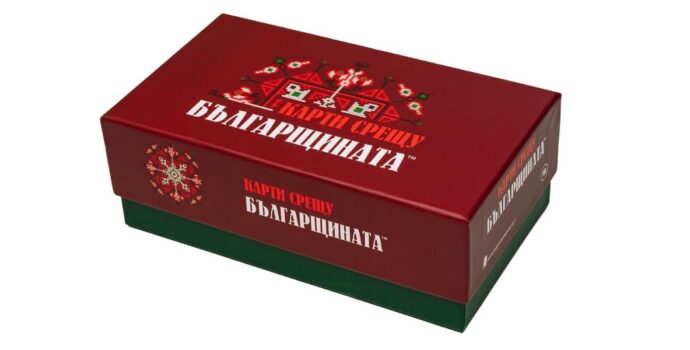
One of the most interesting cases in IP Fabrika's practice is related to the attempt to register the trademark "Cards against Bulgarianness". The case took us nearly three years and unfortunately resulted in...
Did you know that a trademark can be protected on an “intention to use” basis? This means that you can protect your trademark before you start using it in commerce.