In the era of mass digitization and artificial intelligence, the topic of protecting intellectual work is more relevant than ever. The daily generation and sharing of content on the global network imposes an urgent need to understand the different types of copyrights that the law guarantees at the local and global level.
Being aware of the legal framework is a fundamental condition for adequately protecting your work against unauthorized use. Knowing these mechanisms not only prevents plagiarism, but also provides the necessary tools for fair recognition and economic return on your efforts.
Copyright – the foundation
Bulgarian and European law view copyright as a set of two separate but complementary categories of rights. Understanding this dualistic model is essential for every creator, as its function determines how a product can be both protected and economically realized.
Moral copyright
Moral rights are inextricably linked to the author's personality and are largely inalienable. They guarantee the author's right to be recognized as the creator of the work, to decide whether it should be presented under a pseudonym, and to prohibit any changes that would damage his reputation. These rights protect the spiritual connection between the author and his work, remaining his property even after the rights to sell it have been transferred to third parties.
It is important to note, however, that the concept of inalienability is not the same across the EU. While in France and Bulgaria, moral rights are strictly protected and cannot be assigned, in countries with an Anglo-Saxon legal tradition such as Ireland, it is possible for the author to waive certain moral rights in writing.
Property copyright
Unlike non-property rights, property rights are purely economic in nature and are aimed at the financial exploitation of intellectual work. They give the author the right to authorize or prohibit the reproduction, distribution and public performance of his work in return for remuneration. These rights can be assigned through contracts to publishers or producers, which allows the author to derive material benefit from his activity.
Movies, videos, commercials, complex computer games
Derivative and collective
Translations, adaptations of foreign works, databases, anthologies
Why is computer software part of the category of written works?
The classification of software as a written work is based on the legal doctrine that copyright protects the specific expression, not the idea itself. While the idea of a particular functionality is free, the specific source code written by the programmer is a unique arrangement of characters that is treated analogously to a literary text.
Similarly, song lyrics are classified as musical and performing arts because they are intended for shared perception with a melody or for performance in front of an audience, which determines their functional role. Film and play scripts also fall into this category, since they are not literary works in their own right, but serve as the basis for audiovisual or theatrical productions.
Copyright on the Internet – always a topical issue
The digital space is the environment in which intellectual property is most vulnerable, which makes the topic of content protection a subject of increased interest. The ease of copying, sharing and transforming digital assets creates the illusion that everything on the web is free and open to use. In reality, however, the dynamics of the Internet require strict regulations, as any unregulated use of someone else's work in the online space can lead to serious legal consequences for violators and financial losses for creators.
Copyright on images and photographs
This category includes all original photographs, illustrations and graphic designs published on websites or social networks. The most common violation here is the use of images from Google or Pinterest for commercial purposes without a license or without indicating the author. Many users mistakenly believe that the lack of a watermark means “free use”, which often leads to legal claims for compensation.
Protecting text content and articles
This includes blog posts, news articles, e-books, and even original social media posts. Plagiarism, or the direct “copy-pasting” of texts without permission, is the most common violation. This not only violates the author’s intellectual property rights, but also damages the SEO optimization of the original source through duplicate content.
Site copyright
A website is a complex object that combines various types of intellectual property – from graphic design and layout to specific texts and product databases. A common violation here is the “cloning” of the overall look of a popular site by competitors, which misleads users and infringes the rights to the original design. The protection here covers both the structure and the unique functionalities developed specifically for a specific platform.
The protection of these rights can also be carried out through unfair competition and unfair trade practices.
Copyright in computer programs
In the context of the Internet, this includes scripts, plugins, and all the “back-end” code that allows online applications to work. Since computer programs are protected as written works, any copying of parts of the code or its use without the appropriate license is considered an infringement. The most common cases are related to the unauthorized use of paid software without a valid subscription or violation of the terms of use of open source libraries.
YouTube Copyright
YouTube is one of the most tightly regulated environments where rights to music, video, and software demos collide. Protection here covers original videos, editing, scripting, and embedded audio content. The most common violations are the use of background music without proper rights or the insertion of clips from movies and other vlogs without permission.
The platform's system (Content ID) automatically recognizes protected objects, which can lead to the "takedown" of the clip, blocking of revenue (demonetization) or imposing an official warning (copyright strike), which threatens the existence of the entire channel.
Music copyright – basic regulations
Musical works are among the most complex objects of protection, as the rights of composers, songwriters and performers are often intertwined in a single recording. Proper licensing is critical for the legal use of music in commercial outlets, media and online platforms to avoid legal sanctions.
Here are the main regulations that govern the use of musical content:
Distinguishing between copyright and related rights – the law protects separately the creators of the music and lyrics from the performers and producers of the recording itself.
Compulsory licensing for public performance - every commercial establishment (restaurant, shop, hotel) is required to pay fees to collective rights management organizations (such as Musicauthor and PROFON).
Explicit permission is required to use a musical work in films, advertisements, or videos.
Mechanical rights – regulate the reproduction of music on physical media or digital formats.
Territoriality of protection – thanks to international treaties, Bulgarian authors are protected abroad and vice versa.
Book copyrights
Literary works enjoy automatic protection from the moment they are written, encompassing every form of text fixation – from manuscript to digital file. In the publishing business, clear contractual relationships are a guarantee that the writer's intellectual work will not be exploited unlawfully or distorted in the process of distribution.
Exclusive right of reproduction – only the author or the publisher authorized by him has the right to print and reproduce the work in circulation.
Right of translation and adaptation – any translation into a foreign language or adaptation of the book for a screenplay (film, play) requires the express consent of the copyright holder.
Regulation of electronic and audio formats – copyright covers not only paper media, but also distribution in the form of e-books and audiobooks on online platforms.
Right to integrity – publishers are not allowed to make abbreviations, changes, or edits that alter the meaning of the work without the author's approval.
Licensing agreements and royalty - economic relations are regulated through contracts that determine the percentage of sales (remuneration) due to the creator.
Professional protection – a prerequisite for success
In today's dynamic world, information travels in seconds, and protecting intellectual property requires more than just general knowledge - a strategic approach is required. Each copyright case has its own specifics and hidden risks.
Do you want to be calm about your work? The safest way is to trust IPfabrika – lawyers and jurists with many years of experience in the field. Professional legal protection guarantees that your ideas will remain yours alone, and your rights will be protected with the most modern legal instruments.
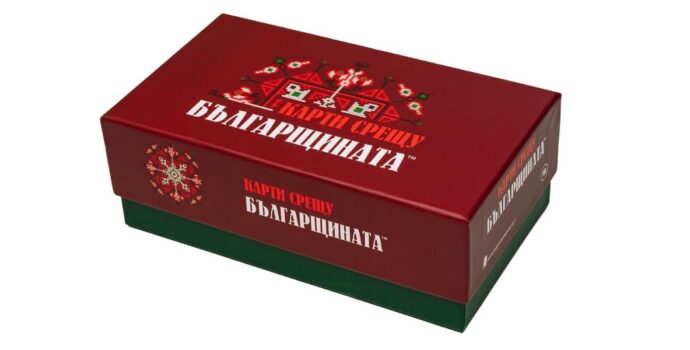
One of the most interesting cases in IP Fabrika's practice is related to the attempt to register the trademark "Cards against Bulgarianness". The case took us nearly three years and unfortunately resulted in...
Did you know that a trademark can be protected on an “intention to use” basis? This means that you can protect your trademark before you start using it in commerce.